

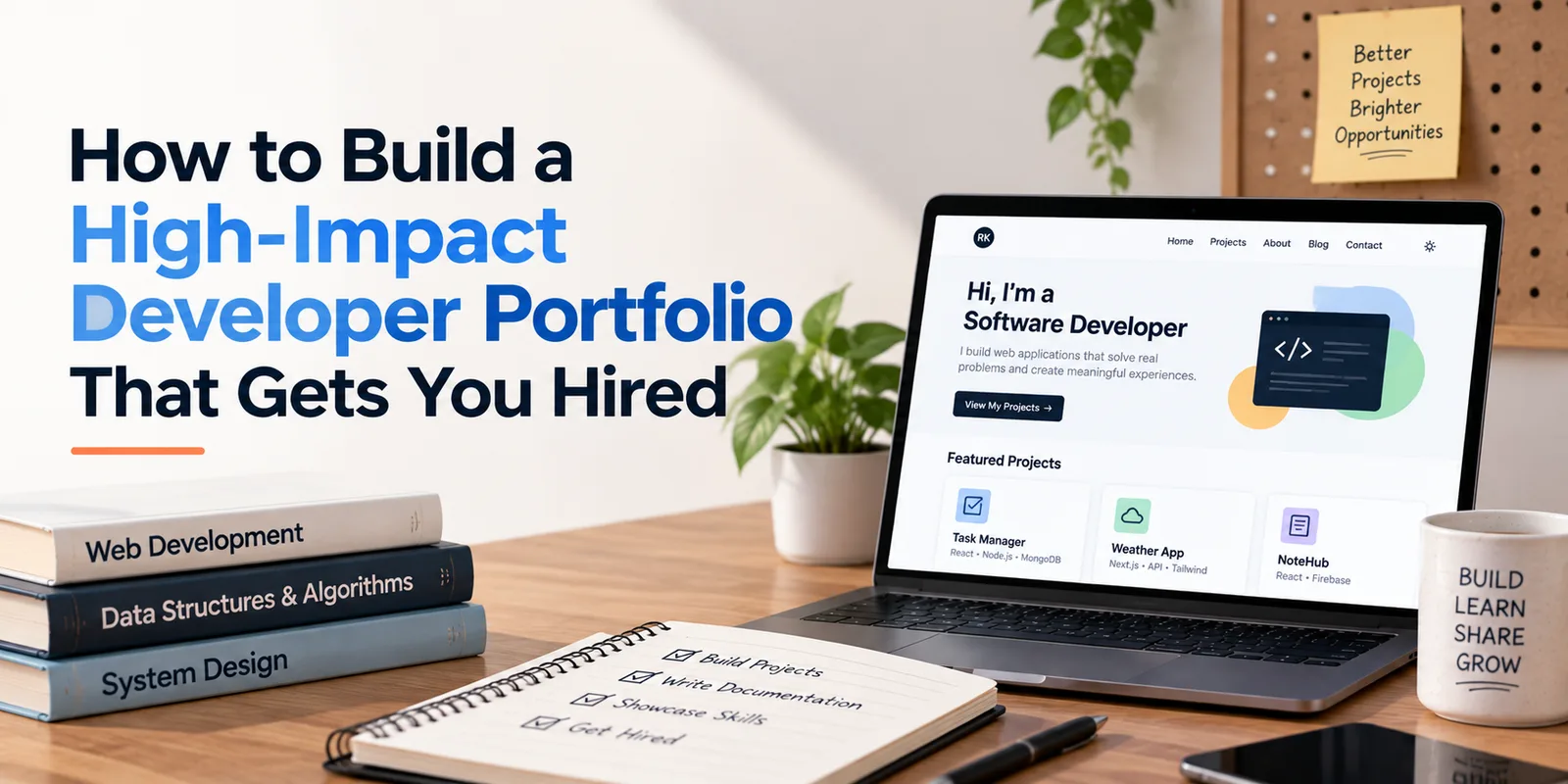
"Learn how to build a high-impact developer portfolio that catches the eye of recruiters. Get tips on projects, hosting, and presentation for 2026."
In the competitive Indian tech landscape, a well-crafted portfolio is the primary bridge between your coding skills and a high-paying offer. Whether you are targeting startups or MNCs, your digital presence acts as a 24/7 recruiter, showcasing your technical depth before you even step into an interview room.
A professional developer portfolio must be more than just a collection of links. It needs to tell a story about your problem-solving capabilities, your command over specific tech stacks, and your ability to ship functional products. Hiring managers at top firms often spend less than 30 seconds scanning your site, so your most impressive work must be visible immediately.
You should prioritize quality over quantity by featuring exactly 3 to 4 high-impact projects. Each project should include a clear problem statement, the technologies used, and a link to the live deployment. If you are struggling with the structure, exploring a developer portfolio template can help you organize your case studies effectively without reinventing the wheel.
Your developer portfolio website should include an 'About' section that highlights your specific expertise, such as MERN stack development or cloud architecture. Avoid generic statements and focus on the value you provide to a company. For instance, mention your experience with scalable systems or your familiarity with industry-standard practices like CI/CD pipelines.
A well-structured site must also include a clear call to action, such as a contact form or a link to your LinkedIn profile. Use clean typography and ensure the site is mobile-responsive, as many recruiters will view your profile on their phones. If you need design guidance, searching for developer portfolio designs can provide excellent inspiration for layout and user experience.
For any software role, your developer portfolio github profile is the most important technical document you own. It provides proof of your coding style, your consistency in contributing to projects, and your ability to collaborate via pull requests. Ensure your README files are comprehensive, explaining how to install, run, and test your applications.
A common mistake is having a cluttered profile with unfinished tutorials. Clean up your developer portfolio github repo list to show only your best work. According to recent NASSCOM reports, the demand for specialized tech talent in India is growing at a significant pace, making it essential for developers to demonstrate their proficiency through clean, documented code. You can find more tips on how to present this during interviews in our guide on Mastering Technical Interview Preparation for Top Indian Firms 2026.
You do not need to be a design expert to build an impressive site. There are many developer portfolio builder tools available that allow you to deploy a professional site in under an hour. While developer portfolio website templates are great, ensure that you customize them enough so that your site does not look identical to thousands of other applicants.
For those who prefer a custom approach, platforms like Vercel or Netlify offer free hosting for static sites. If you are looking for developer portfolio inspiration, browsing sites like developer portfolio awwwards can help you understand current trends in web design. However, keep the focus on performance; a developer portfolio animated with excessive scripts that slow down page load times will hurt your chances more than it helps.
Your site's visual aesthetic should reflect the type of role you want. If you are applying for front-end or UI/UX roles, your developer portfolio website design should be impeccable and showcase your attention to detail. Use high-quality developer portfolio background images that are subtle and do not distract from the content.
If you have design skills, you might also consider linking to a developer portfolio behance profile. This is particularly useful for front-end developers who want to show their wireframing and prototyping skills. Remember that your portfolio is a product, and you are the user; ensure the navigation is intuitive and the content is scannable. For more insights on finding the right opportunities to test your skills, check out our remote jobs board.
Not all projects are created equal. Focus on developer portfolio ideas that solve real-world problems rather than simple 'to-do' lists. A project that integrates an API, handles user authentication, and manages a database is far more impressive than a static landing page.
By building these types of projects, you show recruiters that you can handle the complexities of professional software development. As noted by the NASSCOM, the Indian tech ecosystem is increasingly valuing practical, hands-on experience over theoretical knowledge, making these projects vital to your success.
Yes, you absolutely should. Treat your projects as professional experience, especially if you lack formal work history. Use a dedicated section to link to your live projects and GitHub repositories.
Three to four high-quality projects are sufficient. It is better to have three polished, bug-free applications than ten mediocre, incomplete scripts that do not work properly.
It is highly recommended. A custom domain like 'yourname.dev' or 'yourname.tech' looks professional and demonstrates that you are serious about your career. It is a small investment that adds significant credibility.
Yes, using builders is acceptable as long as the final product is professional and fast. However, if you are applying for a front-end role, building your site from scratch using React or Vue is a great way to showcase your coding skills.
You should update your portfolio every time you complete a significant project or learn a new, relevant skill. A stale portfolio suggests that you have stopped learning, which is a red flag for recruiters in the fast-moving tech industry.